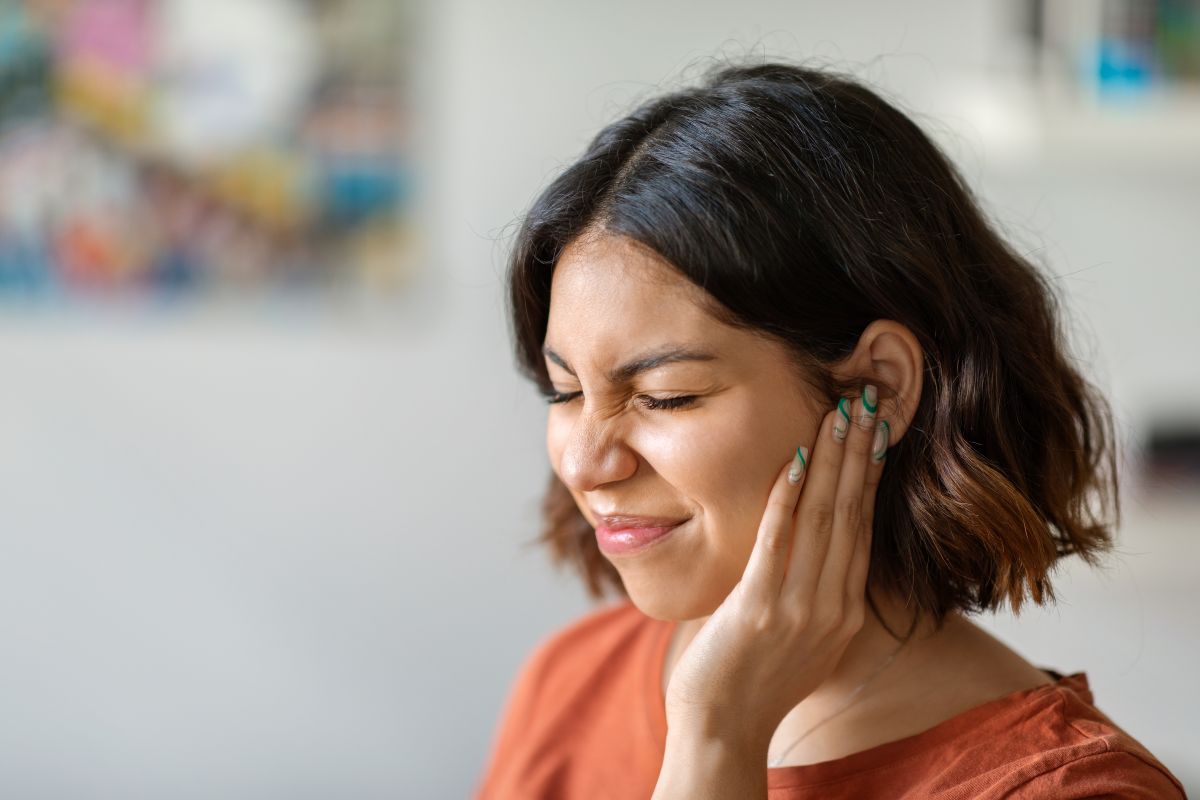
Ear pain during chewing is often confusing because the ear itself may be completely healthy. The jaw joint sits directly beside the ear canal, which is why TMJ disorders, muscle tension, or dental issues frequently cause ear discomfort. This guide explains why chewing triggers ear pain and what patients in South Bend, Granger, and Fort Wayne can do to find relief.
Ear pain when chewing is more common than most people realize. For many people, the discomfort feels sudden and sharp, while others notice a dull ache that worsens when talking or eating. Because the ear and jaw share nerves and anatomical structures, irritation in one area often affects the other.
At TMJ & Sleep Therapy Centre Indiana, we regularly see patients who have been treated repeatedly for “ear infections” even though the ear is completely clear. Instead, the problem comes from the temporomandibular joint, the muscles of the jaw, or misalignment in the bite. Understanding these connections can help you identify the true cause of your pain and get proper treatment.
The Connection Between the Ear and the Jaw
The TMJ sits just in front of the ear and shares nerve pathways with the ear canal. When the joint becomes inflamed, strained, or overloaded, the pain often radiates to the ear. This is why a person can feel ear pressure or earache even when the ear looks normal upon medical examination.
The muscles that support chewing, swallowing, and facial movement also attach near the ear. When these muscles tighten or spasm, the pain can be felt deep inside the ear. This close anatomical relationship explains why symptoms often overlap.
To learn more about the TMJ’s anatomy, the Cleveland Clinic provides a helpful overview:
Most Common Causes of Ear Pain When Chewing
Ear pain triggered by chewing can come from several different sources. Some causes are temporary, while others require treatment to prevent symptoms from worsening.
TMJ Disorders
TMJ disorders are the most common cause of chewing-related ear pain. When the joint becomes inflamed, clicking, popping, stiffness, and radiating ear pain are typical symptoms. Pain may appear during chewing, talking, or yawning and is often paired with headaches or jaw tension.
For deeper insight into facial pain, you can explore your dedicated page here:
Nighttime Clenching and Grinding
Many adults clench or grind their teeth during sleep. This forces the jaw backward toward the ear canal and overworks the muscles that stabilize the joint. Morning ear pain, jaw tension, and headaches are common signs.
This also connects to airway concerns, which you cover here:
Dental Issues
Cavities, cracked teeth, abscesses, or misaligned bites can all cause pain that radiates to the ear. In some cases, the pain is referred, meaning the problem is in the tooth but felt in the ear.
Grinding also contributes to wear and inflammation, which may relate to chronic mouth breathing:
Ear Infections
Although less common in adults, middle ear infections and swimmer’s ear can make chewing painful because the jaw moves the tissues around the ear canal. Symptoms usually include fever, fullness in the ear, or muffled hearing.
Sinus Pressure
Sinus infections create pressure behind the cheekbones and around the ear. Movements of the jaw during chewing can intensify this sensation.
Muscle Tension or Stress
Stress activates the muscles used for chewing and jaw stabilization. When these muscles tighten, they may cause sharp or aching pain around the ear.
TMJ Disorders: The Most Common Reason for Ear Pain While Chewing
When the joint becomes irritated or misaligned, chewing increases pressure within the TMJ. This pressure travels to the ear because of the shared nerve supply. TMJ-related ear pain is often accompanied by:
• jaw clicking or popping
• ear fullness
• pain in the temples
• soreness when waking
• sharp pain when biting into food
A helpful internal link for further reading: Symptoms | TMJ, Sleep & Airway Clarity
When Ear Infections or Sinus Issues Are the Cause
Ear pain from infection usually feels different than TMJ pain. It may include fever, drainage, or hearing changes. Pain worsens when lying down or when pressure builds behind the eardrum.
Sinus infections create facial pressure and congestion, which can mimic ear pain. Chewing increases movement in the sinus and jaw areas, leading to discomfort.
Dental Causes That Create Ear Pain
Problems with the teeth can easily cause pain felt near the ear. A deep cavity, periodontal infection, or misaligned bite places strain on the TMJ. Bruxism (teeth grinding) places continuous pressure on the joint and surrounding muscles.
Misalignment or restriction in the tongue can also contribute to dysfunctional jaw mechanics which you can read about more here Tongue-Tied & Lip-Tied | Oral Function & TMJ Symptoms
Symptoms to Watch For

You should be attentive to the following symptoms:
• recurring ear pain that worsens when chewing
• clicking, popping, or grinding in the jaw
• difficulty opening your mouth
• swelling around the jaw
• pain spreading to the neck or temple
• ringing or fullness in the ear
If any of these symptoms occur in children, they may also relate to airway or sleep concerns:
Children’s Airway Orthopedic Development | Healthy Growth
How Ear Pain Is Diagnosed
A proper evaluation includes:
• reviewing medical and dental history
• examining jaw movement
• checking for noise or restriction in the TMJ
• evaluating bite alignment
• assessing airway and tongue posture
• imaging when needed to evaluate joint health
This comprehensive approach helps determine whether the pain comes from the ear itself or from the TMJ and supporting muscles.
Treatment Options for Ear Pain When Chewing
Treatment depends on the underlying cause. Many patients benefit from:
TMJ-focused treatment
• oral appliances
• anti-inflammatory approaches
• physical therapy
• muscle release techniques
• bite correction when needed
Dental care
• treating cavities or infections
• adjusting bite alignment
• nighttime mouthguards
Medical care
• antibiotics for ear infections
• sinus treatment
• ENT referral for structural nasal issues
If airway or breathing contributes to clenching, internal linking supports this:
Snoring & Sleep Apnea | Signs, Risks & Relief
Mouth Breathing | Health, Development & TMJ Impacts
At Home Relief Strategies
You can often reduce symptoms at home by:
• using moist heat over the jaw
• avoiding hard or chewy foods
• practicing gentle jaw stretches
• improving posture
• reducing stress and muscle tension
• supporting nasal breathing
Prevention Tips
Preventing ear pain during chewing involves:
• avoiding clenching
• treating airway concerns early
• reducing inflammation
• seeking timely dental care
• supporting healthy tongue posture
When to See a Specialist
If pain persists, worsens, or interferes with chewing or speaking, it is time for a TMJ and airway evaluation. Untreated TMJ issues can worsen over time and begin affecting sleep, posture, and overall comfort.
Next Steps for Patients in South Bend, Granger, and Fort Wayne
If chewing causes ear pain, the underlying cause may be related to your TMJ, bite, airway, or dental health. TMJ and Sleep Therapy Centre Indiana offers comprehensive evaluations to uncover the true source of your discomfort and create a personalized plan for relief.
Schedule a TMJ and ear pain consultation today and take the first step toward comfortable, pain-free chewing and better long term jaw health.